Overview
The high-fidelity audiophile community has had this for a while but we have never had it for photography. Lensica is a shared measurement system and library. Fully open for anyone to use. My best attempt at an academically rigorous way to collect measurements from any lens and body combo (including phones).
The issue
Enthusiasts pay thousands of dollars for specific camera bodies and lenses when at the end of the day we view the product of that expensive gear on the same format: data rendered by a digital display. We might pay thousands on a Leica body that hasn't been produced since the 1900s, and even more on a vintage lens that cannot be reproduced - because lenses back then included lead, radioactive materials, and other interesting but now-illegal things to add to a manufactured product. All so we can translate that analog film experience to a digital format. The thing about digital formats is that we have complete control over what we see. We can audit every 1 and 0, and see what the differences are between the phone in your pocket and whatever fancy Hasselblad, Makina, Celebrity point and shoot- so with enough work and (separately) enough people participating, we may be able to dilute out what the differences are well enough to give everyone some access to that color science. Everyone working together to make an accurate filter that everyone can share, so more people can be interested in photography, and more people can experiment with the exclusive stuff sounds like fun to me. Lowering the general barrier of entry to anyone simply trying a new lens, camera, etc, sounds like fun to me.
Vintage lenses are especially regarded as magic voodoo that make everything look good, but my theory is that at its core, any lens or body is technically reproducible because we all view it translated from subtractive into additive color via a digital display that is usually compressed at the end of the day anyway. And we ooh and ahh over the illegal radioactive/lead lens magic of yesteryear when what its actually living on is a server and the display in your pocket, and a lot of that is absolutely able to be analyzed for what makes it special and then given to the masses. If enough people are willing and enthusiastic about the idea anyway...
It runs live at lensica.floralovercast.com. A wizard walks you through a session, a QR code opens the target suite on the display device, and every shot comes back with a verdict on whether it measured, and what to reshoot if it did not.
The rig is a screen
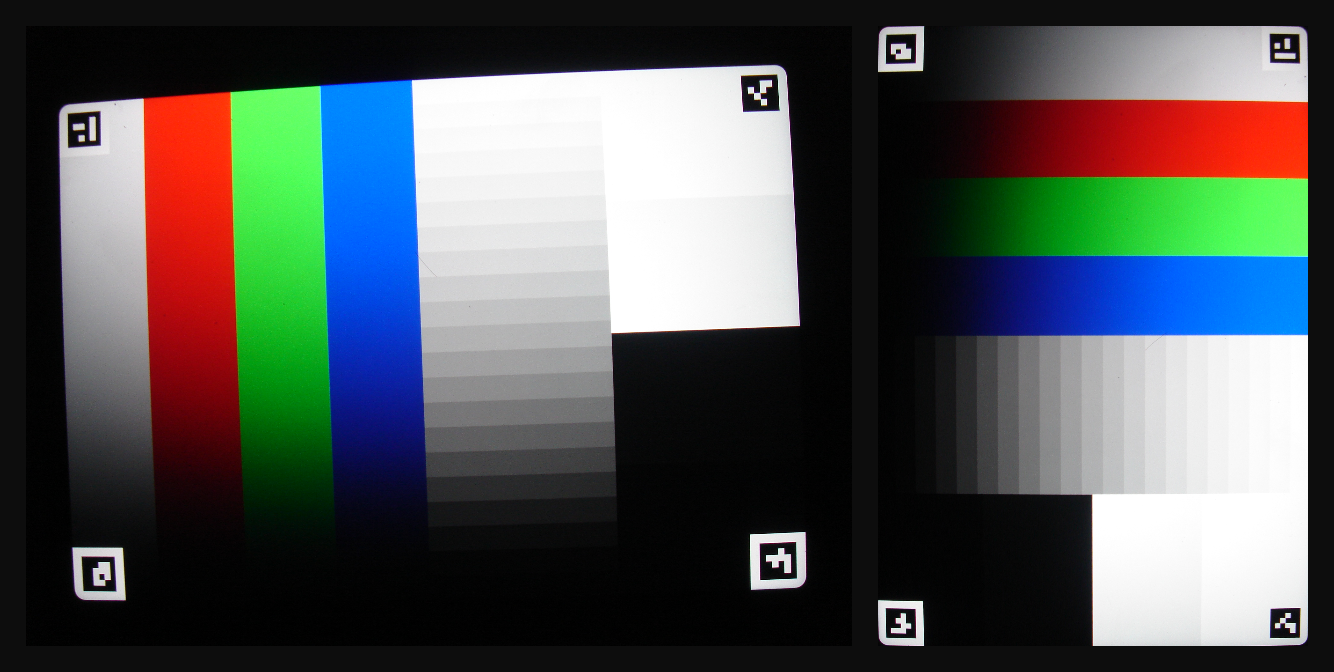
Every camera can photograph the same display. Each target frame carries corner markers, so software can warp the photo back onto the target pixel for pixel; framing, tilt, and brightness stop mattering, and marker zones double as white and black references. Measurements are display-referred by design. That is a ceiling I can live with, since everything anyone watches is on a display anyway.
Capture splits into two classes that are kept separate on purpose: RAW measures lens plus sensor, camera JPEG adds the maker's processing on top. They genuinely disagree. One phone's glare number varied two-to-one across JPEG shots while its raw held steady at 0.9%.
What one session measures
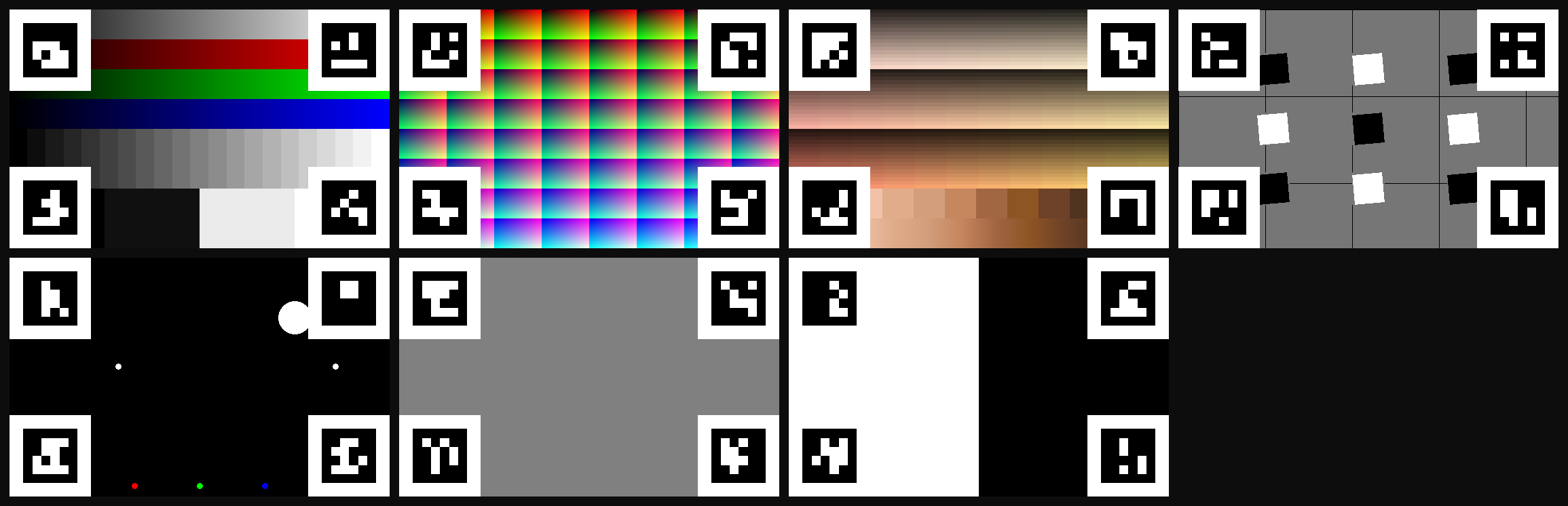
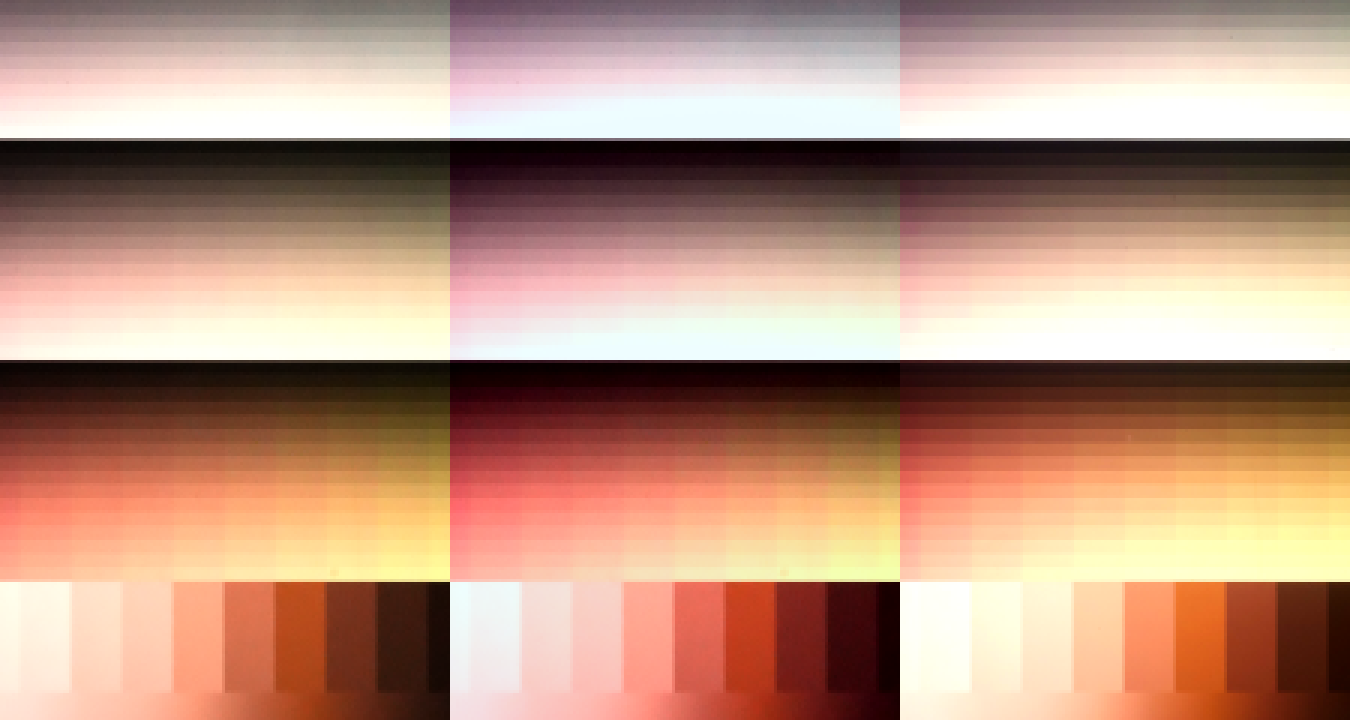
- Tone: Per-channel response curves from ramp and gray-step frames.
- Resolution: Slanted-edge MTF at nine field positions, center to corner.
- Vignette + cast: Illumination and color-shift maps from a flat gray frame.
- Haze: A half-white, half-black frame; light spilling into the black half is veiling glare, measured to about 0.01% repeatability.
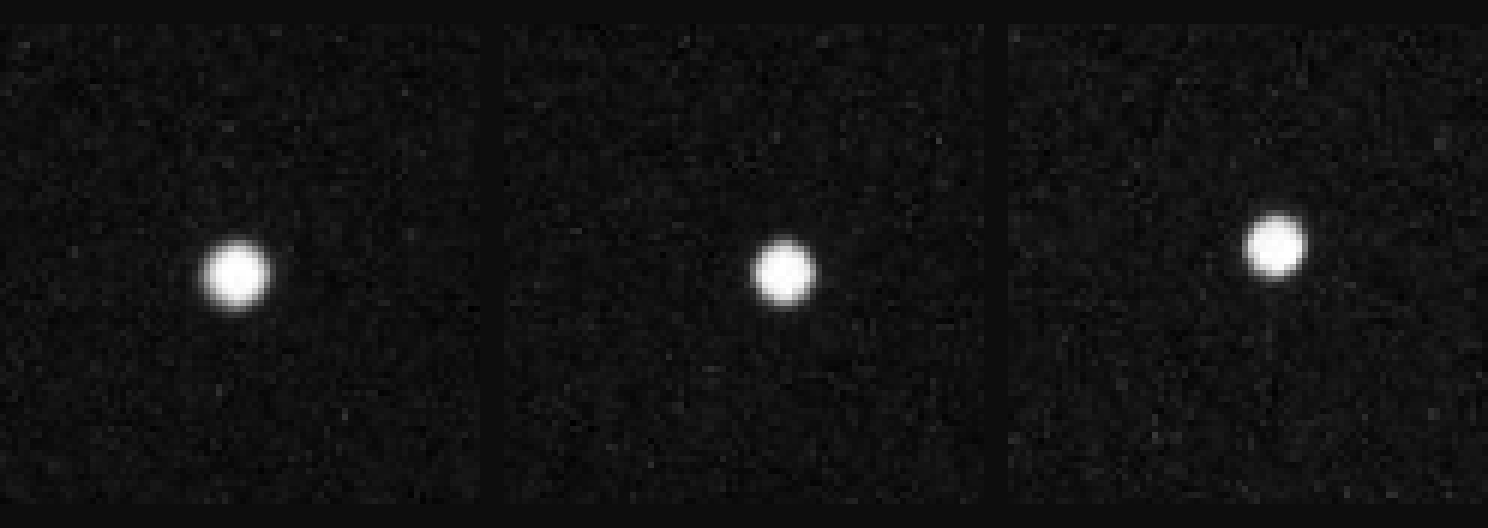
- Bokeh + glow: Point lights in a dark room. Each photographed dot literally is the lens's smearing kernel at that spot.
- Color: A spectrum sweep feeding a color matrix, and eventually a full LUT.
The library disagrees with me already
Five rigs measured so far, 2005 to 2024, and I expected old to mean worse at everything. A 2005 Cyber-shot point-and-shoot posted the most neutral grays of anything I have measured, while also being soft, crushing both ends of its range, and losing 31% of its light in the corners. A 2013 iPhone posts sharpness numbers close to a modern prime lens, and the measurement is honest about why: its JPEG engine paints halos on every edge, and that sharpening is part of its look.
Smaller things picked up numbers too. True Tone on an iPad shifts what a camera sees about 6% redder, so the protocol's turn-it-off rule now cites a measurement instead of a superstition.
Trust, handled boringly
The measurement core is deterministic scripts, and I want it to stay that way: content-addressed target versions, anchor references in every frame, and validity checks on every shot. At one point I tried to cheat my own protocol, adding a white border to the dark bokeh frame so autofocus would bite. The pipeline rejected both shots for ambient light before I got around to confessing.
Multiple takes of the same frame get ranked, and rejects carry a stated reason. Originals are archived, so when the extraction improves, every profile in the library re-processes instead of asking people to shoot again.
Where it goes
The site's hero is a measured look transfer, one camera's rendering mapped onto another's shot, built from real session data rather than a mockup. The longer ambition is a crowd-sourced library with an editable preference target for looks, the way headphone land has the Harman curve. Five rigs is enough to prove the loop. The interesting versions of everything above start around thirty.