
Gwangju Noh · 光州 盧氏
The Family Book
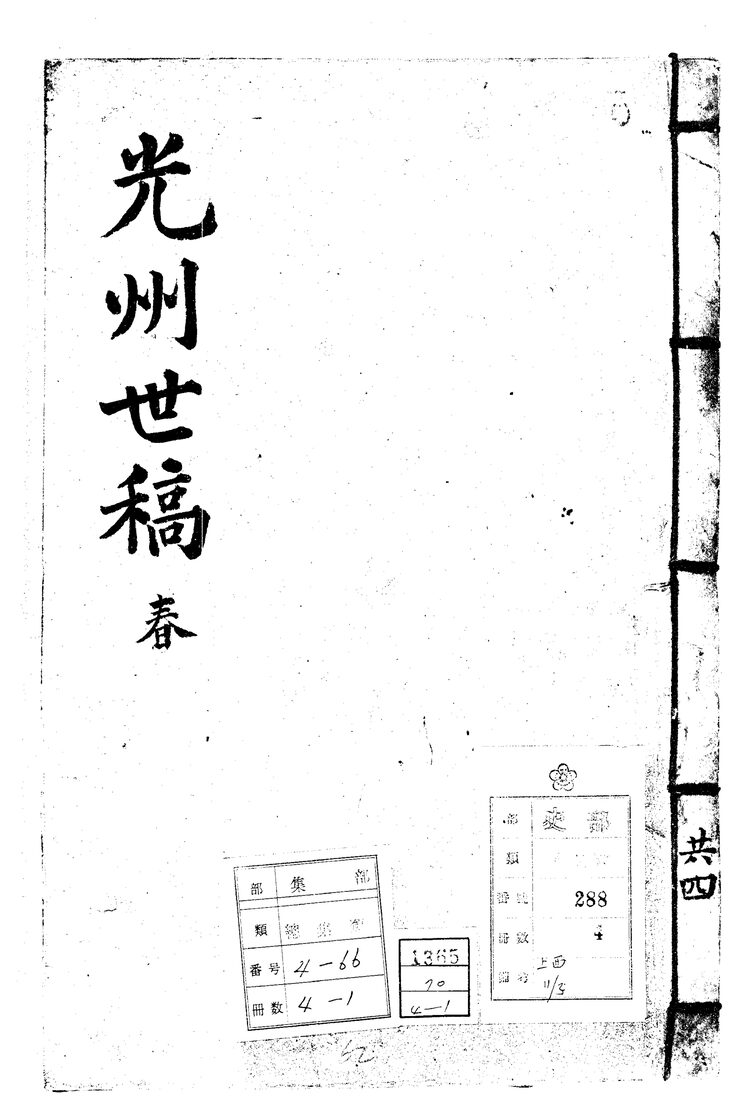
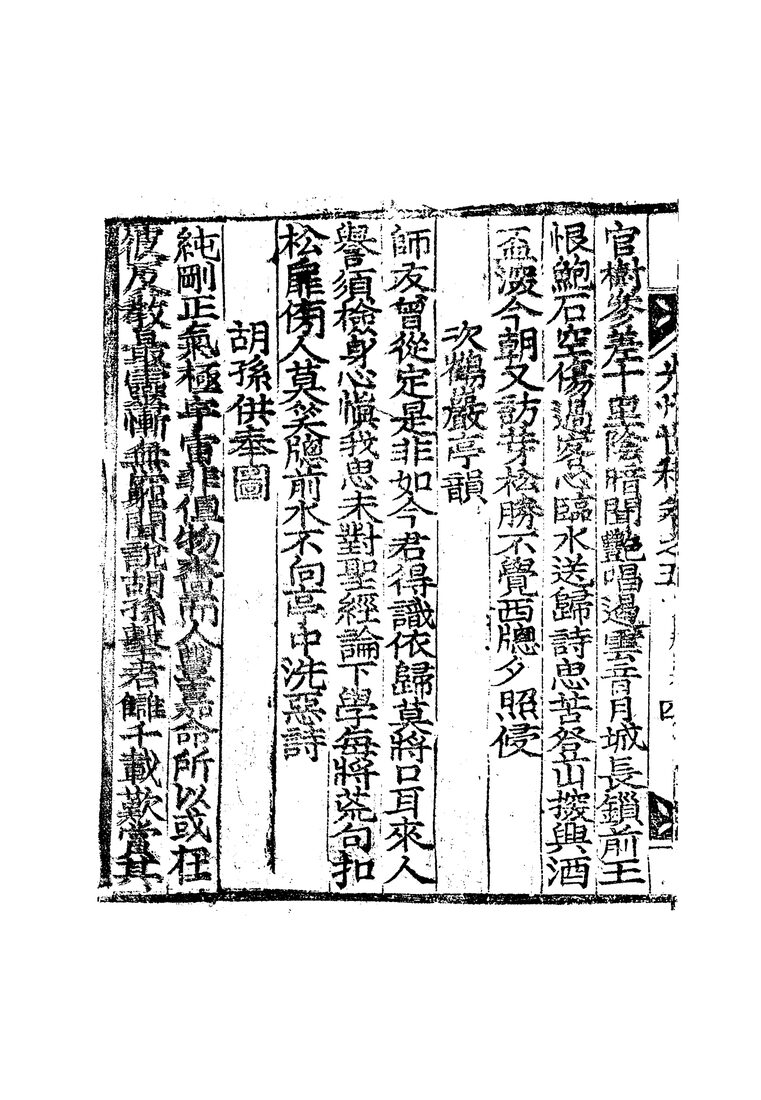
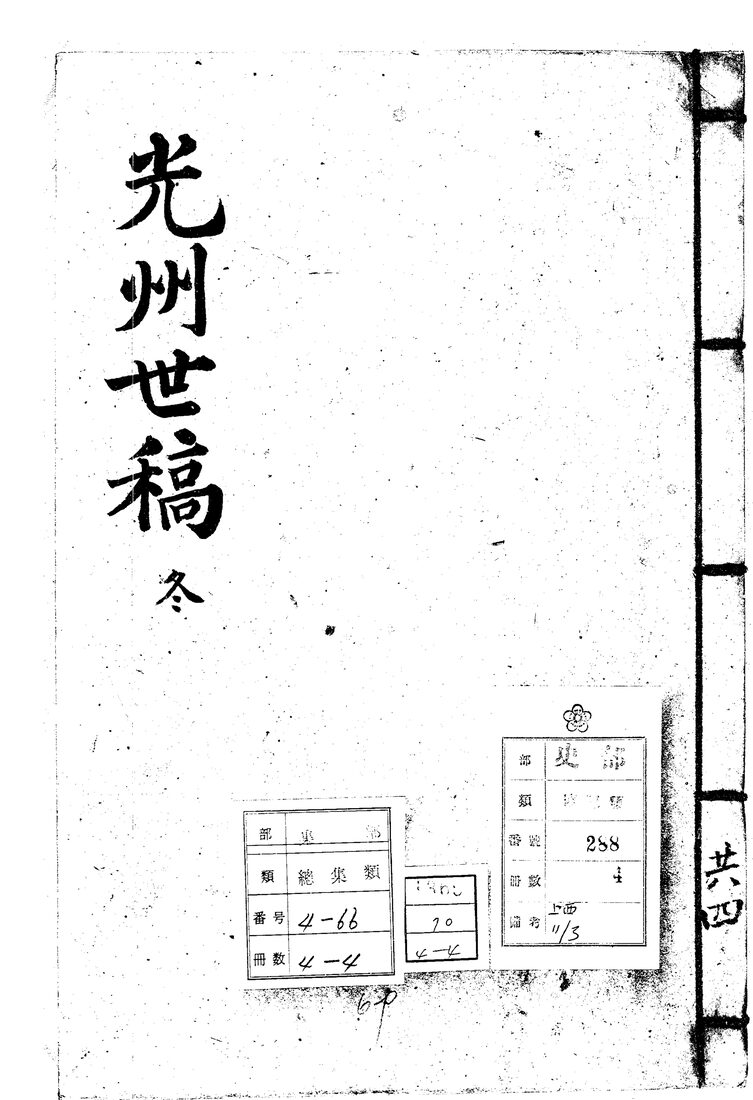
Four scanned volumes of a woodblock-printed genealogy the Gwangju Noh kept for four hundred years. What follows is not the names and the begats, but the lives the book set down inside it.
A jokbo (族譜) is a clan genealogy. This one belongs to the Gwangju Noh (光州 盧氏). By the family's own account the line begins in 877, when a Tang scholar named No Su crossed to Silla with his nine sons, ahead of a collapsing dynasty. The eldest settled at Gwangsan, today Gwangju, and gave the family its name.
Bound in beside the charts is a 世稿 (se-go), "generational manuscripts": the writing the family produced, in poems, letters, and memorials. The men recorded here in detail are not the founders but their descendants of the 1500s and 1600s, who lived through the wars of those two centuries.
No Pil 노필
"From boyhood he had no taste for office. He would not write the set-piece essays the examinations required, and gave himself to moral philosophy instead. A diviner once told him he would place first in the year of the Earth Tiger; he laughed, saying he would be past fifty by then and cared nothing for rank. In the spring of 1519 the court held a special examination by recommendation, for men of known character. He was put forward, and passed, as the diviner had said.
"He held the post a few months. That same year the reform party fell; he was stripped of office and returned home, and is said to have gone gladly. He named his retreat for a 'drunk stone,' after Tao Yuanming, who would lie down drunk upon a rock. There he kept his books, declined every later summons, and did not serve again."
When Japan invaded in 1592 the regular army broke, and the defense of the south fell to militias, the "Righteous Armies," raised by local scholars. Several of the men below were among them.
Ok-chon 옥촌
"He served as secretary and staff officer to Gwak Jae-u, the Righteous Army commander called the Red Coat General, and took part in the planning of the camp. In 1597 he helped hold the fortress at Hwawang, which the enemy did not venture to attack. When the war ended the court offered him a commandery and a magistracy. He declined them, saying he had done no more than his duty, and went home to farm and to teach."
Ip-jae 입재
"He studied under Jo Sik of Nammyeong, who wore a bell at his waist and kept a sword beside him, and held that learning counted for nothing unless it was acted upon. When the Japanese came he wiped his eyes and rose, raising a militia though he was already sixty-five. At the death of his parents he kept the three years' mourning beside the grave, eating only gruel. He died soon after the war's end."
Hwa-am 화암
"He disliked the contention of the examinations and did not sit them. Two brothers of the village once fell to quarreling over a field. He covered his eyes and said he could not bear to watch, that the bond of brothers was given by Heaven and they would trade it for a clod of earth; and the two were ashamed and gave way. His kinsman Mae-juk-wa (노극성), the 'plum-and-bamboo studio,' was of the same quiet line."
A generation later came the second war: the Qing invasion of 1636, and the king's surrender at Samjeondo, where he bowed three times to the Manchu emperor. The men recorded here lived through it.
Guk-dam 국담
"When the court fell to debating whether to fight the Qing or come to terms, he sent up a memorial against the peace, holding that a state which lives on by becoming a vassal has already suffered the worse death.
Better the country broken and in the right than whole and in service. the sense of his memorial, as the book gives it
"After the king's surrender he went home and planted chrysanthemums, which flower in the cold, and did not take office again."
Sa-mae-dang 사매당
"He was born the same year as Guk-dam. He studied under Jeong Gu of Hangang, and when the old scholar was struck down by palsy he attended him without leaving, watching over his medicine and his food by day and by night. His teacher gave him four plum trees in thanks; he planted them at his house and named his hall for them, the Hall of the Four Plums."
Mang-ho-jeong 망호정
"On the bank of the Nakdong he built a pavilion and called it Mang-ho-jeong, the lake-view pavilion. There the scattered gentry of the district gathered to drink and to write, and, in his own phrase, to forget the aging world for a while. The pavilion still stands at Changnyeong, and a branch of the family takes its name from it."
Song-cheon 송천
"After two wars had passed through the country within a single century, he set himself to record them: a chronicle of the kingdom and a geography of the district, that the deeds of the militia generation might not be lost from the official histories, which had their own cause to forget. The work never circulated, and never left the family."
Banggok 방곡
"The fourth volume is his alone, a book of poems. He was often ill, wrote steadily to his friends, and was asked for the verses at every sixtieth and seventieth birthday in his circle. In one poem he dreams that his late teacher hands him a text, and wakes ashamed, skilled (he feared) in fine words but not in the deeper learning the man had prized.
Guest, come in, but leave the talk of glory and rank at the door. I already know my name is not on the list. from "Living in Seclusion"
"He kept to a small circle in the country, and wrote, to the end, of his friends and his own poor health."
Provenance
The source is the Gwangju Noh Si-se-go (光州盧氏世稿), a clan collection whose printing woodblocks are kept at Dongsan Seodang in Ibang-myeon, Changnyeong, a lecture hall the province lists as Cultural Heritage Material (designated 2005) and the Gwangju Noh lineage there maintains. The images on this page are photographs of the printed originals.
These entries are a retelling, not a verbatim translation. The book is in classical Chinese and was read with the help of an AI translator; the wording here follows what the record says rather than rendering it line for line, and keeps it the way a proud family chose to remember its own. Dates and details are the record's claims rather than verified history.
The seal at the top is the emblem of the 노씨중앙종친회 (Noh Clan Central Association).